Buy eell.eu ?
We are moving the project
eell.eu .
Are you interested in purchasing the domain
eell.eu ?
domain@kv-gmbh.de · 0541-91531010
Buy eell.eu ?
Why is TCP slower than UDP?
TCP is slower than UDP because it is a connection-oriented protocol, meaning it establishes a connection between the sender and receiver before transmitting data. This involves a three-way handshake process, which adds overhead and latency to the communication. Additionally, TCP includes error-checking and retransmission of lost packets, which can further slow down the transmission of data. In contrast, UDP is a connectionless protocol that does not have the same level of error-checking and retransmission, making it faster but less reliable for transmitting data. **
Are incoming TCP/UDP packets being blocked?
To determine if incoming TCP/UDP packets are being blocked, you can check the firewall settings on the network or system in question. Look for any rules that may be blocking incoming traffic on specific ports or protocols. Additionally, you can use network monitoring tools to analyze incoming traffic and see if any packets are being dropped or blocked. If packets are being blocked, you may need to adjust the firewall settings to allow the desired traffic to pass through. **


Similar search terms for UDP
Top-Angebote
Products related to UDP:
-
HARPERCOLLINS Creative Confidence by Tom & David Kelley – Unleashing Your Creative Potential & Innovation MindsetA powerful and inspiring book from the founders of IDEO, the award-winning design firm, on unleashing the creativity that lies within each and every one of us. Too often, companies and individuals assume that creativity and innovation are the domain of the ‘creative types’. But two of the foremost experts in innovation, design and creativity on the planet show us that each and every one of us is creative. In an entertaining and inspiring narrative that draws on countless stories from their work at IDEO, and with many of the world's top companies and design firms, David and Tom Kelley identify the principles and strategies that will allow us to tap into our creative potential in our work lives, and in our personal lives, allow us to think outside the box in terms of how we approach and solve problems. ‘Creative Confidence’ is a book that will help each of us be more productive and successful in our lives and in our careers.4,95 £*Shipping: 1,99 £Secure redirect to the provider
-
SAGE Publications A Little Guide for Teachers: Diversity in Schools (A Little Guide for Teachers)A Little Guide for Teachers: Diversity in Schools aims to provide starting points for teachers and leaders in creating a curriculum, either across disciplines or within subjects, that is as deep and diverse as their students. The Little Guide for Teachers series is little in size but BIG on all the support and inspiration you need to navigate your day to day life as a teacher. · Authored by experts in the field · Easy to dip in-and-out of · Interactive activities encourage you to write into the book and make it your own · Fun engaging illustrations throughout · Read in an afternoon or take as long as you like with it!12,99 £*Shipping: 2,99 £Secure redirect to the provider
-
Kaspersky VPN Secure ConnectionWith Kaspersky VPN Secure Connection you can browse securely and anonymously online, at industry-leading speed, and unlock global content without restrictions from anywhere. The VPN selects the fastest server for you from 2000+ options in your choice of 70+ territories.Kaspersky VPN Secure Connection can be used on Windows, macOS, Android, iOS operating systems. Kaspersky VPN Secure Connection features: Privacy IThe VPN hides your identity and online activity from businesses and governments recording your behavior. IP address masking. Your unique IP will be masked by servers, ensuring no one can trace back your devices and geolocation Protection for sensitive apps only. You can choose which data to encrypt with VPN – such as data in your banking and social apps – while allowing other apps to access the Internet directly. Zero activity logs. Search and browse without anything or anyone keeping digital records of your activity and history. Security Encrypted data. Military-grade 256 bit encryption prevents criminals from stealing the data which you send and receive. Whether you do shopping, banking, video calls or emails, hackers can never intercept and steal your data. Safe banking. Data encryption also ensures that your online banking and payment details can never be intercepted. Security for your home WiFi. Any device that you connect to your home broadband is automatically covered. Freedom Ultra-fast connection. By using our fast VPN servers, nothing can slow you down online. No geo-restrictions. Access your favorite shows, movies & websites from anywhere in the world.20,90 £*Shipping: 0,00 £Secure redirect to the provider




-
Why does DHCP use the UDP protocol?
DHCP uses the UDP protocol because it is a connectionless protocol that does not require a persistent connection between the client and the server. This makes it efficient for the dynamic allocation of IP addresses and configuration information to network devices. UDP also allows for quick communication between the client and server without the overhead of establishing and maintaining a connection, which is important for the fast and efficient allocation of IP addresses in a network environment. Additionally, UDP is well-suited for broadcasting and multicasting, which are used by DHCP to discover and communicate with servers on the network. **
-
Do TCP and UDP have the same port?
No, TCP and UDP do not have the same port. While both TCP and UDP use port numbers to identify different communication channels, they have separate sets of port numbers. TCP and UDP each have their own range of port numbers, and a port number used for TCP communication will not be the same as a port number used for UDP communication. This allows for different types of communication to be handled separately and efficiently. **
-
What is the major difference between TCP and UDP?
The major difference between TCP (Transmission Control Protocol) and UDP (User Datagram Protocol) lies in their connection-oriented versus connectionless nature. TCP is connection-oriented, meaning it establishes a connection between the sender and receiver before transmitting data, ensuring data reliability through error-checking and retransmission. On the other hand, UDP is connectionless, meaning it does not establish a connection before sending data, resulting in faster transmission but with no guarantee of data delivery or order. This fundamental distinction makes TCP more suitable for applications requiring reliable data delivery, while UDP is preferred for real-time applications where speed is prioritized over reliability. **
-
What is UDP and how does data input work?
UDP (User Datagram Protocol) is a connectionless protocol that operates at the transport layer of the OSI model. It is used for sending data over a network without establishing a connection. Data input in UDP involves the sender breaking the data into packets, adding a header with necessary information like source and destination ports, and sending it over the network. The receiver then receives the packets and reassembles them to reconstruct the original data. UDP is faster than TCP but does not guarantee delivery or order of packets. **

Why can't the Wiz outlet find the broadcast UDP?
The Wiz outlet may not be able to find the broadcast UDP due to several reasons. It could be a network issue, such as the UDP broadcast being blocked by a firewall or router settings. Additionally, there could be a problem with the Wiz outlet's network configuration or its ability to receive and process UDP broadcasts. It's also possible that there is a compatibility issue between the Wiz outlet and the device or software trying to send the broadcast UDP. Troubleshooting these potential issues and ensuring that the network and devices are properly configured can help resolve the problem. **
What is UDP and how does the data input work?
UDP, or User Datagram Protocol, is a connectionless protocol that operates at the transport layer of the OSI model. It is used to send data over a network without establishing a connection. UDP is often used for applications that require fast transmission of data, such as online gaming, video streaming, and VoIP. Data input in UDP works by breaking the data into small packets and sending them to the destination without any guarantee of delivery or order. Unlike TCP, UDP does not provide error checking or retransmission of lost packets, making it a less reliable but faster option for transmitting data. When the data reaches the destination, the packets are reassembled into the original data. **
Top-Angebote
Products related to UDP:
-
Uplifted Finds The Control Circle Archetype Social Worker Empowerment Canvas Executive Office & Wellness Sanctuary Decor 13 X 18 Cm No Frame"Inaugurate a grounding ""MindfulnessSanctuary"" energy in your environment with our ""Control Circle"" Archetype Canvas. This premium Social Worker and Mental Health professional print is the ultimate designer solution for creating a ""ClinicalModern"" or..."41,97 $*Shipping: 0,00 $Secure redirect to the provider
-
HARPERCOLLINS Creative Confidence by Tom & David Kelley – Unleashing Your Creative Potential & Innovation MindsetA powerful and inspiring book from the founders of IDEO, the award-winning design firm, on unleashing the creativity that lies within each and every one of us. Too often, companies and individuals assume that creativity and innovation are the domain of the ‘creative types’. But two of the foremost experts in innovation, design and creativity on the planet show us that each and every one of us is creative. In an entertaining and inspiring narrative that draws on countless stories from their work at IDEO, and with many of the world's top companies and design firms, David and Tom Kelley identify the principles and strategies that will allow us to tap into our creative potential in our work lives, and in our personal lives, allow us to think outside the box in terms of how we approach and solve problems. ‘Creative Confidence’ is a book that will help each of us be more productive and successful in our lives and in our careers.4,95 £*Shipping: 1,99 £Secure redirect to the provider
-
SAGE Publications A Little Guide for Teachers: Diversity in Schools (A Little Guide for Teachers)A Little Guide for Teachers: Diversity in Schools aims to provide starting points for teachers and leaders in creating a curriculum, either across disciplines or within subjects, that is as deep and diverse as their students. The Little Guide for Teachers series is little in size but BIG on all the support and inspiration you need to navigate your day to day life as a teacher. · Authored by experts in the field · Easy to dip in-and-out of · Interactive activities encourage you to write into the book and make it your own · Fun engaging illustrations throughout · Read in an afternoon or take as long as you like with it!12,99 £*Shipping: 2,99 £Secure redirect to the provider
-
Why is TCP slower than UDP?
TCP is slower than UDP because it is a connection-oriented protocol, meaning it establishes a connection between the sender and receiver before transmitting data. This involves a three-way handshake process, which adds overhead and latency to the communication. Additionally, TCP includes error-checking and retransmission of lost packets, which can further slow down the transmission of data. In contrast, UDP is a connectionless protocol that does not have the same level of error-checking and retransmission, making it faster but less reliable for transmitting data. **
-
Are incoming TCP/UDP packets being blocked?
To determine if incoming TCP/UDP packets are being blocked, you can check the firewall settings on the network or system in question. Look for any rules that may be blocking incoming traffic on specific ports or protocols. Additionally, you can use network monitoring tools to analyze incoming traffic and see if any packets are being dropped or blocked. If packets are being blocked, you may need to adjust the firewall settings to allow the desired traffic to pass through. **
-
Why does DHCP use the UDP protocol?
DHCP uses the UDP protocol because it is a connectionless protocol that does not require a persistent connection between the client and the server. This makes it efficient for the dynamic allocation of IP addresses and configuration information to network devices. UDP also allows for quick communication between the client and server without the overhead of establishing and maintaining a connection, which is important for the fast and efficient allocation of IP addresses in a network environment. Additionally, UDP is well-suited for broadcasting and multicasting, which are used by DHCP to discover and communicate with servers on the network. **
-
Do TCP and UDP have the same port?
No, TCP and UDP do not have the same port. While both TCP and UDP use port numbers to identify different communication channels, they have separate sets of port numbers. TCP and UDP each have their own range of port numbers, and a port number used for TCP communication will not be the same as a port number used for UDP communication. This allows for different types of communication to be handled separately and efficiently. **
Similar search terms for UDP
-
Kaspersky VPN Secure ConnectionWith Kaspersky VPN Secure Connection you can browse securely and anonymously online, at industry-leading speed, and unlock global content without restrictions from anywhere. The VPN selects the fastest server for you from 2000+ options in your choice of 70+ territories.Kaspersky VPN Secure Connection can be used on Windows, macOS, Android, iOS operating systems. Kaspersky VPN Secure Connection features: Privacy IThe VPN hides your identity and online activity from businesses and governments recording your behavior. IP address masking. Your unique IP will be masked by servers, ensuring no one can trace back your devices and geolocation Protection for sensitive apps only. You can choose which data to encrypt with VPN – such as data in your banking and social apps – while allowing other apps to access the Internet directly. Zero activity logs. Search and browse without anything or anyone keeping digital records of your activity and history. Security Encrypted data. Military-grade 256 bit encryption prevents criminals from stealing the data which you send and receive. Whether you do shopping, banking, video calls or emails, hackers can never intercept and steal your data. Safe banking. Data encryption also ensures that your online banking and payment details can never be intercepted. Security for your home WiFi. Any device that you connect to your home broadband is automatically covered. Freedom Ultra-fast connection. By using our fast VPN servers, nothing can slow you down online. No geo-restrictions. Access your favorite shows, movies & websites from anywhere in the world.20,90 £*Shipping: 0,00 £Secure redirect to the provider
-
Simple Living Connection DeskThe Connection Desk by Simple Living gives you space for productivity in an attractive package. Crafted with metal legs and a laminated MDF desk top, this desk has a sleek contemporary design that will enhance your home office.49,99 $*Shipping: 0,00 $Secure redirect to the provider
-
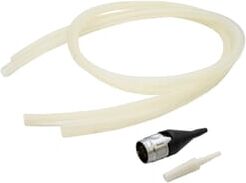
Testo Hose Connection SetHose connection set for separate gas pressure measurement testo 327 / testo 330-LL. With the pressure connection set, the flue gas measuring instruments testo 330 LL and testo 320 can be used for the measurement of gas or air pressure. The hoses are attached to the test nipples at the measurement site, and connected to the flue gas measuring instrument via the measuring instrument adapter.35,70 £*Shipping: 5,00 £Secure redirect to the provider
-
What is the major difference between TCP and UDP?
The major difference between TCP (Transmission Control Protocol) and UDP (User Datagram Protocol) lies in their connection-oriented versus connectionless nature. TCP is connection-oriented, meaning it establishes a connection between the sender and receiver before transmitting data, ensuring data reliability through error-checking and retransmission. On the other hand, UDP is connectionless, meaning it does not establish a connection before sending data, resulting in faster transmission but with no guarantee of data delivery or order. This fundamental distinction makes TCP more suitable for applications requiring reliable data delivery, while UDP is preferred for real-time applications where speed is prioritized over reliability. **
-
What is UDP and how does data input work?
UDP (User Datagram Protocol) is a connectionless protocol that operates at the transport layer of the OSI model. It is used for sending data over a network without establishing a connection. Data input in UDP involves the sender breaking the data into packets, adding a header with necessary information like source and destination ports, and sending it over the network. The receiver then receives the packets and reassembles them to reconstruct the original data. UDP is faster than TCP but does not guarantee delivery or order of packets. **
-
Why can't the Wiz outlet find the broadcast UDP?
The Wiz outlet may not be able to find the broadcast UDP due to several reasons. It could be a network issue, such as the UDP broadcast being blocked by a firewall or router settings. Additionally, there could be a problem with the Wiz outlet's network configuration or its ability to receive and process UDP broadcasts. It's also possible that there is a compatibility issue between the Wiz outlet and the device or software trying to send the broadcast UDP. Troubleshooting these potential issues and ensuring that the network and devices are properly configured can help resolve the problem. **
-
What is UDP and how does the data input work?
UDP, or User Datagram Protocol, is a connectionless protocol that operates at the transport layer of the OSI model. It is used to send data over a network without establishing a connection. UDP is often used for applications that require fast transmission of data, such as online gaming, video streaming, and VoIP. Data input in UDP works by breaking the data into small packets and sending them to the destination without any guarantee of delivery or order. Unlike TCP, UDP does not provide error checking or retransmission of lost packets, making it a less reliable but faster option for transmitting data. When the data reaches the destination, the packets are reassembled into the original data. **
* All prices are inclusive of VAT and, if applicable, plus shipping costs. The offer information is based on the details provided by the respective shop and is updated through automated processes. Real-time updates do not occur, so deviations can occur in individual cases. ** Note: Parts of this content were created by AI.