Buy eell.eu ?
We are moving the project
eell.eu .
Are you interested in purchasing the domain
eell.eu ?
domain@kv-gmbh.de · 0541-91531010
Buy eell.eu ?
How are Latin subjunctive subordinate clauses still translated with the subjunctive?
Latin subjunctive subordinate clauses are still translated with the subjunctive in English to convey the same sense of uncertainty, possibility, or doubt. In English, the subjunctive mood is used to express hypothetical or unreal situations, wishes, recommendations, or demands. Therefore, when translating Latin subjunctive subordinate clauses, the English subjunctive is used to maintain the same mood and meaning of the original Latin sentence. **
Maybe subjunctive or indicative?
The choice between subjunctive or indicative depends on the context of the sentence. The subjunctive mood is used to express doubt, uncertainty, desire, or hypothetical situations, while the indicative mood is used for statements of fact or certainty. To determine whether to use subjunctive or indicative, consider the verb's relationship to reality and whether it is expressing a fact or a possibility. **

Similar search terms for Subjunctive
Top-Angebote
Products related to Subjunctive:
-
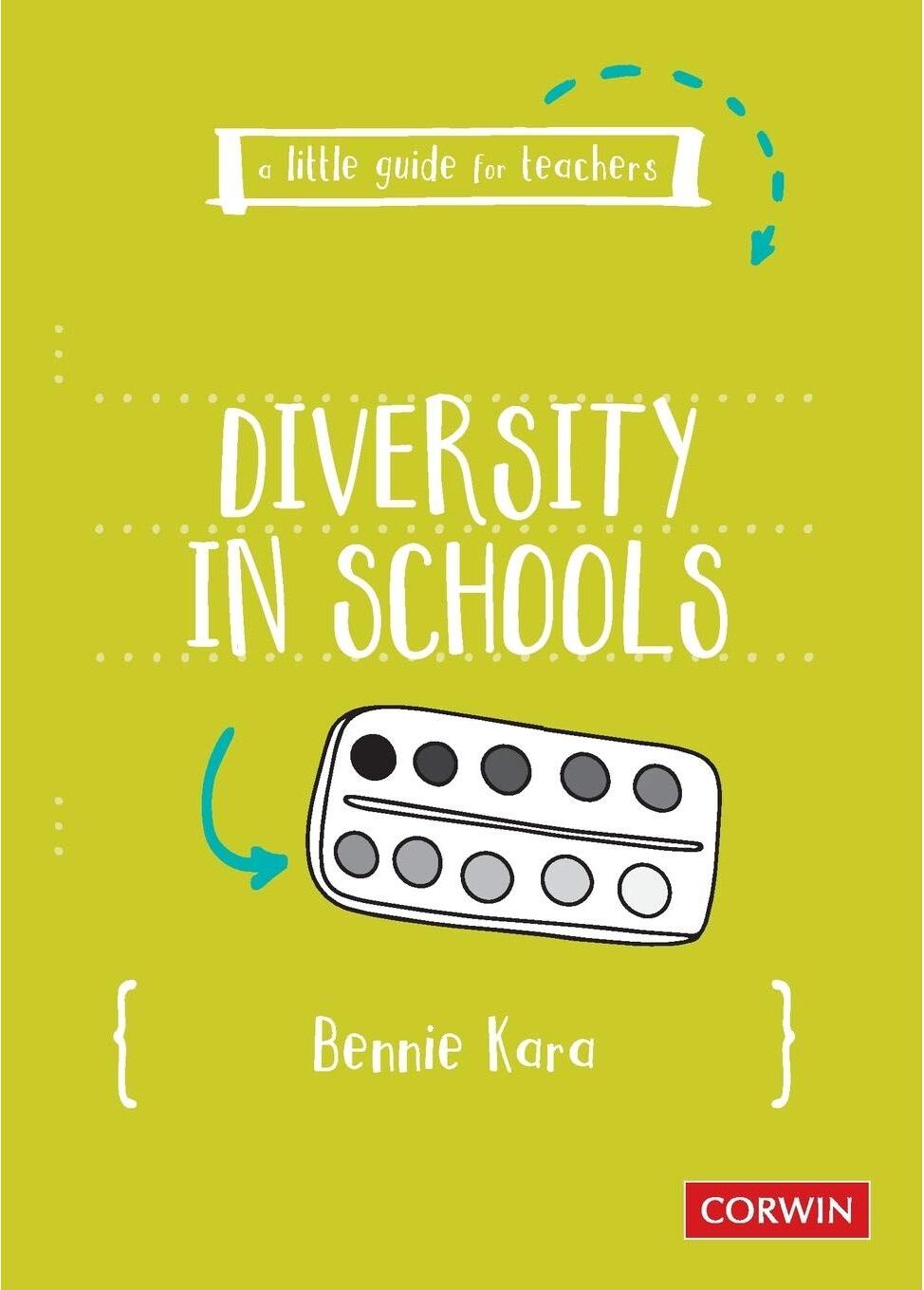
SAGE Publications A Little Guide for Teachers: Diversity in Schools (A Little Guide for Teachers)A Little Guide for Teachers: Diversity in Schools aims to provide starting points for teachers and leaders in creating a curriculum, either across disciplines or within subjects, that is as deep and diverse as their students. The Little Guide for Teachers series is little in size but BIG on all the support and inspiration you need to navigate your day to day life as a teacher. · Authored by experts in the field · Easy to dip in-and-out of · Interactive activities encourage you to write into the book and make it your own · Fun engaging illustrations throughout · Read in an afternoon or take as long as you like with it!12,99 £*Shipping: 2,99 £Secure redirect to the provider
-
HARPERCOLLINS Creative Confidence by Tom & David Kelley – Unleashing Your Creative Potential & Innovation MindsetA powerful and inspiring book from the founders of IDEO, the award-winning design firm, on unleashing the creativity that lies within each and every one of us. Too often, companies and individuals assume that creativity and innovation are the domain of the ‘creative types’. But two of the foremost experts in innovation, design and creativity on the planet show us that each and every one of us is creative. In an entertaining and inspiring narrative that draws on countless stories from their work at IDEO, and with many of the world's top companies and design firms, David and Tom Kelley identify the principles and strategies that will allow us to tap into our creative potential in our work lives, and in our personal lives, allow us to think outside the box in terms of how we approach and solve problems. ‘Creative Confidence’ is a book that will help each of us be more productive and successful in our lives and in our careers.4,95 £*Shipping: 1,99 £Secure redirect to the provider
-
Simple Living Connection DeskThe Connection Desk by Simple Living gives you space for productivity in an attractive package. Crafted with metal legs and a laminated MDF desk top, this desk has a sleek contemporary design that will enhance your home office.49,99 $*Shipping: 0,00 $Secure redirect to the provider
-
Kaspersky VPN Secure ConnectionWith Kaspersky VPN Secure Connection you can browse securely and anonymously online, at industry-leading speed, and unlock global content without restrictions from anywhere. The VPN selects the fastest server for you from 2000+ options in your choice of 70+ territories.Kaspersky VPN Secure Connection can be used on Windows, macOS, Android, iOS operating systems. Kaspersky VPN Secure Connection features: Privacy IThe VPN hides your identity and online activity from businesses and governments recording your behavior. IP address masking. Your unique IP will be masked by servers, ensuring no one can trace back your devices and geolocation Protection for sensitive apps only. You can choose which data to encrypt with VPN – such as data in your banking and social apps – while allowing other apps to access the Internet directly. Zero activity logs. Search and browse without anything or anyone keeping digital records of your activity and history. Security Encrypted data. Military-grade 256 bit encryption prevents criminals from stealing the data which you send and receive. Whether you do shopping, banking, video calls or emails, hackers can never intercept and steal your data. Safe banking. Data encryption also ensures that your online banking and payment details can never be intercepted. Security for your home WiFi. Any device that you connect to your home broadband is automatically covered. Freedom Ultra-fast connection. By using our fast VPN servers, nothing can slow you down online. No geo-restrictions. Access your favorite shows, movies & websites from anywhere in the world.20,90 £*Shipping: 0,00 £Secure redirect to the provider



-
Perhaps, subjunctive or indicative?
The choice between subjunctive or indicative depends on the context of the sentence. The subjunctive mood is used to express hypothetical or uncertain situations, wishes, recommendations, or doubts. On the other hand, the indicative mood is used for statements of fact or certainty. Therefore, if the sentence is expressing a possibility, doubt, or desire, the subjunctive mood would be more appropriate. **
-
Conditional, subjunctive or indicative?
The choice between conditional, subjunctive, or indicative mood depends on the context of the sentence. The conditional mood is used to express a hypothetical situation or a condition that is dependent on something else happening. The subjunctive mood is used to express wishes, recommendations, or possibilities. The indicative mood is used to state facts or ask questions. **
-
What is the use of the present subjunctive and the past subjunctive?
The present subjunctive is used to express desires, doubts, wishes, or hypothetical situations in the present or future. It is often used after certain verbs and conjunctions that indicate uncertainty or subjectivity. The past subjunctive, on the other hand, is used to express desires, doubts, wishes, or hypothetical situations in the past. It is often used in the same way as the present subjunctive, but in reference to past events or situations. Both subjunctive forms are used to convey uncertainty or subjectivity in a sentence. **
-
Are the subjunctive I and the subjunctive II present in all tenses?
No, the subjunctive I and subjunctive II are not present in all tenses. The subjunctive I is only present in the present tense, while the subjunctive II is present in the past tense. The subjunctive I is used to express wishes, suggestions, or hypothetical situations in the present, while the subjunctive II is used to express wishes, suggestions, or hypothetical situations in the past. Each tense has its own specific form of the subjunctive mood. **


'It is strange that + subjunctive'
It is strange that she should be so calm in such a chaotic situation. **
Would we use the subjunctive?
We would use the subjunctive mood in English to express wishes, hypothetical situations, recommendations, or demands. It is used to convey uncertainty, doubt, or desire. The subjunctive is typically used after certain verbs, expressions, or conjunctions that indicate these types of situations. **
Top-Angebote
Products related to Subjunctive:
-
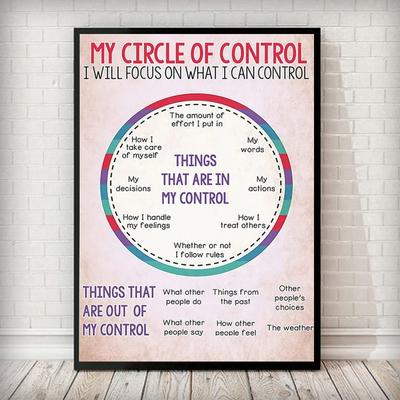
Uplifted Finds The Control Circle Archetype Social Worker Empowerment Canvas Executive Office & Wellness Sanctuary Decor 13 X 18 Cm No Frame"Inaugurate a grounding ""MindfulnessSanctuary"" energy in your environment with our ""Control Circle"" Archetype Canvas. This premium Social Worker and Mental Health professional print is the ultimate designer solution for creating a ""ClinicalModern"" or..."41,97 $*Shipping: 0,00 $Secure redirect to the provider
-
SAGE Publications A Little Guide for Teachers: Diversity in Schools (A Little Guide for Teachers)A Little Guide for Teachers: Diversity in Schools aims to provide starting points for teachers and leaders in creating a curriculum, either across disciplines or within subjects, that is as deep and diverse as their students. The Little Guide for Teachers series is little in size but BIG on all the support and inspiration you need to navigate your day to day life as a teacher. · Authored by experts in the field · Easy to dip in-and-out of · Interactive activities encourage you to write into the book and make it your own · Fun engaging illustrations throughout · Read in an afternoon or take as long as you like with it!12,99 £*Shipping: 2,99 £Secure redirect to the provider
-
HARPERCOLLINS Creative Confidence by Tom & David Kelley – Unleashing Your Creative Potential & Innovation MindsetA powerful and inspiring book from the founders of IDEO, the award-winning design firm, on unleashing the creativity that lies within each and every one of us. Too often, companies and individuals assume that creativity and innovation are the domain of the ‘creative types’. But two of the foremost experts in innovation, design and creativity on the planet show us that each and every one of us is creative. In an entertaining and inspiring narrative that draws on countless stories from their work at IDEO, and with many of the world's top companies and design firms, David and Tom Kelley identify the principles and strategies that will allow us to tap into our creative potential in our work lives, and in our personal lives, allow us to think outside the box in terms of how we approach and solve problems. ‘Creative Confidence’ is a book that will help each of us be more productive and successful in our lives and in our careers.4,95 £*Shipping: 1,99 £Secure redirect to the provider
-
How are Latin subjunctive subordinate clauses still translated with the subjunctive?
Latin subjunctive subordinate clauses are still translated with the subjunctive in English to convey the same sense of uncertainty, possibility, or doubt. In English, the subjunctive mood is used to express hypothetical or unreal situations, wishes, recommendations, or demands. Therefore, when translating Latin subjunctive subordinate clauses, the English subjunctive is used to maintain the same mood and meaning of the original Latin sentence. **
-
Maybe subjunctive or indicative?
The choice between subjunctive or indicative depends on the context of the sentence. The subjunctive mood is used to express doubt, uncertainty, desire, or hypothetical situations, while the indicative mood is used for statements of fact or certainty. To determine whether to use subjunctive or indicative, consider the verb's relationship to reality and whether it is expressing a fact or a possibility. **
-
Perhaps, subjunctive or indicative?
The choice between subjunctive or indicative depends on the context of the sentence. The subjunctive mood is used to express hypothetical or uncertain situations, wishes, recommendations, or doubts. On the other hand, the indicative mood is used for statements of fact or certainty. Therefore, if the sentence is expressing a possibility, doubt, or desire, the subjunctive mood would be more appropriate. **
-
Conditional, subjunctive or indicative?
The choice between conditional, subjunctive, or indicative mood depends on the context of the sentence. The conditional mood is used to express a hypothetical situation or a condition that is dependent on something else happening. The subjunctive mood is used to express wishes, recommendations, or possibilities. The indicative mood is used to state facts or ask questions. **
Similar search terms for Subjunctive
-
Simple Living Connection DeskThe Connection Desk by Simple Living gives you space for productivity in an attractive package. Crafted with metal legs and a laminated MDF desk top, this desk has a sleek contemporary design that will enhance your home office.49,99 $*Shipping: 0,00 $Secure redirect to the provider
-
Kaspersky VPN Secure ConnectionWith Kaspersky VPN Secure Connection you can browse securely and anonymously online, at industry-leading speed, and unlock global content without restrictions from anywhere. The VPN selects the fastest server for you from 2000+ options in your choice of 70+ territories.Kaspersky VPN Secure Connection can be used on Windows, macOS, Android, iOS operating systems. Kaspersky VPN Secure Connection features: Privacy IThe VPN hides your identity and online activity from businesses and governments recording your behavior. IP address masking. Your unique IP will be masked by servers, ensuring no one can trace back your devices and geolocation Protection for sensitive apps only. You can choose which data to encrypt with VPN – such as data in your banking and social apps – while allowing other apps to access the Internet directly. Zero activity logs. Search and browse without anything or anyone keeping digital records of your activity and history. Security Encrypted data. Military-grade 256 bit encryption prevents criminals from stealing the data which you send and receive. Whether you do shopping, banking, video calls or emails, hackers can never intercept and steal your data. Safe banking. Data encryption also ensures that your online banking and payment details can never be intercepted. Security for your home WiFi. Any device that you connect to your home broadband is automatically covered. Freedom Ultra-fast connection. By using our fast VPN servers, nothing can slow you down online. No geo-restrictions. Access your favorite shows, movies & websites from anywhere in the world.20,90 £*Shipping: 0,00 £Secure redirect to the provider
-
What is the use of the present subjunctive and the past subjunctive?
The present subjunctive is used to express desires, doubts, wishes, or hypothetical situations in the present or future. It is often used after certain verbs and conjunctions that indicate uncertainty or subjectivity. The past subjunctive, on the other hand, is used to express desires, doubts, wishes, or hypothetical situations in the past. It is often used in the same way as the present subjunctive, but in reference to past events or situations. Both subjunctive forms are used to convey uncertainty or subjectivity in a sentence. **
-
Are the subjunctive I and the subjunctive II present in all tenses?
No, the subjunctive I and subjunctive II are not present in all tenses. The subjunctive I is only present in the present tense, while the subjunctive II is present in the past tense. The subjunctive I is used to express wishes, suggestions, or hypothetical situations in the present, while the subjunctive II is used to express wishes, suggestions, or hypothetical situations in the past. Each tense has its own specific form of the subjunctive mood. **
-
'It is strange that + subjunctive'
It is strange that she should be so calm in such a chaotic situation. **
-
Would we use the subjunctive?
We would use the subjunctive mood in English to express wishes, hypothetical situations, recommendations, or demands. It is used to convey uncertainty, doubt, or desire. The subjunctive is typically used after certain verbs, expressions, or conjunctions that indicate these types of situations. **
* All prices are inclusive of VAT and, if applicable, plus shipping costs. The offer information is based on the details provided by the respective shop and is updated through automated processes. Real-time updates do not occur, so deviations can occur in individual cases. ** Note: Parts of this content were created by AI.